Kervio
An AI-first quoting-to-manufacturing platform for stone fabrication.
The problem
Stone fabrication shops quote from spreadsheets and drawings, then re-enter the same job into manufacturing. The quote and the cut are two different documents maintained by two different people, and the margin leaks in the gap between them. Nothing on the market was built for how these shops actually work, because the shops are too small for enterprise software and the workflow is too specific for generic tools.
What was built
- A quoting-to-manufacturing workflow modelled on how fabricators actually run a job, developed with Australian shops rather than for them.
- Product architecture, pricing model (per-seat / per-quote / per-shop) and roadmap authored personally.
- A live multi-tenant production system, built by directing AI engineering agents under specification, acceptance criteria and ground-truth verification gates.
- Geometry and vision components carried through a provisional-patent workstream with counsel.
What changed
- The quote becomes the manufacturing instruction — one document, not two.
- Proof that the method scales: complex vertical software, built and commercialised without an engineering team.
The screens
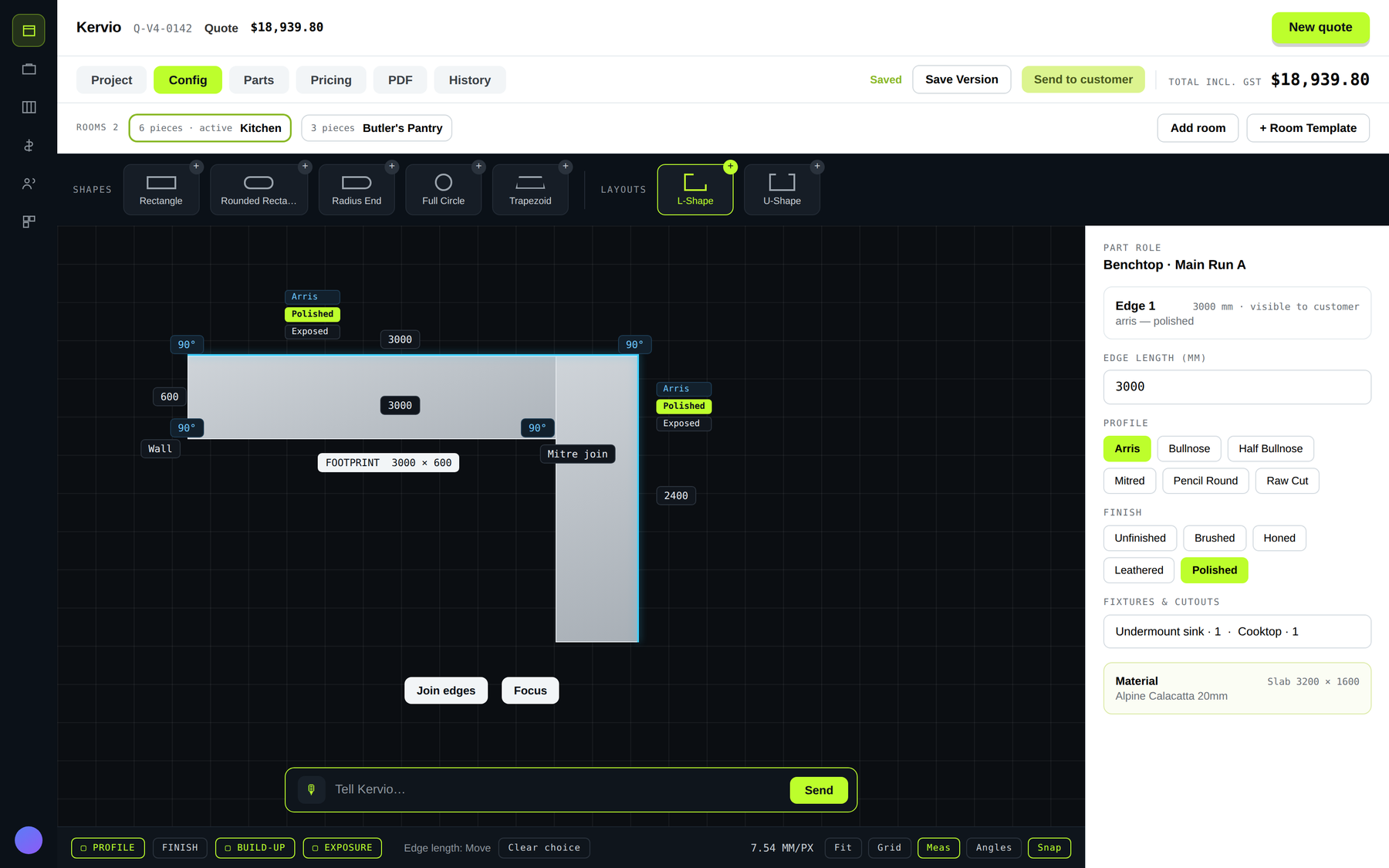
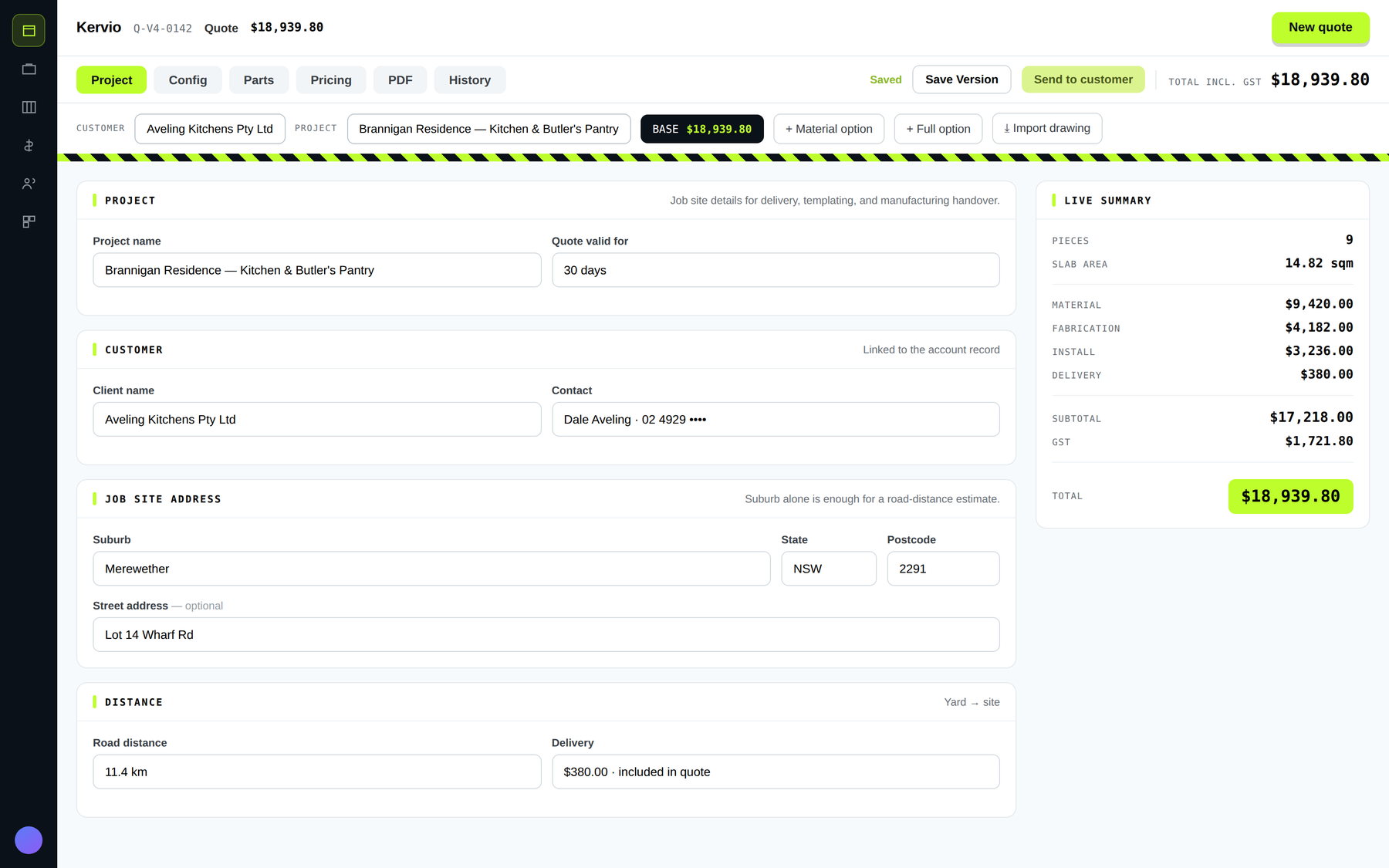
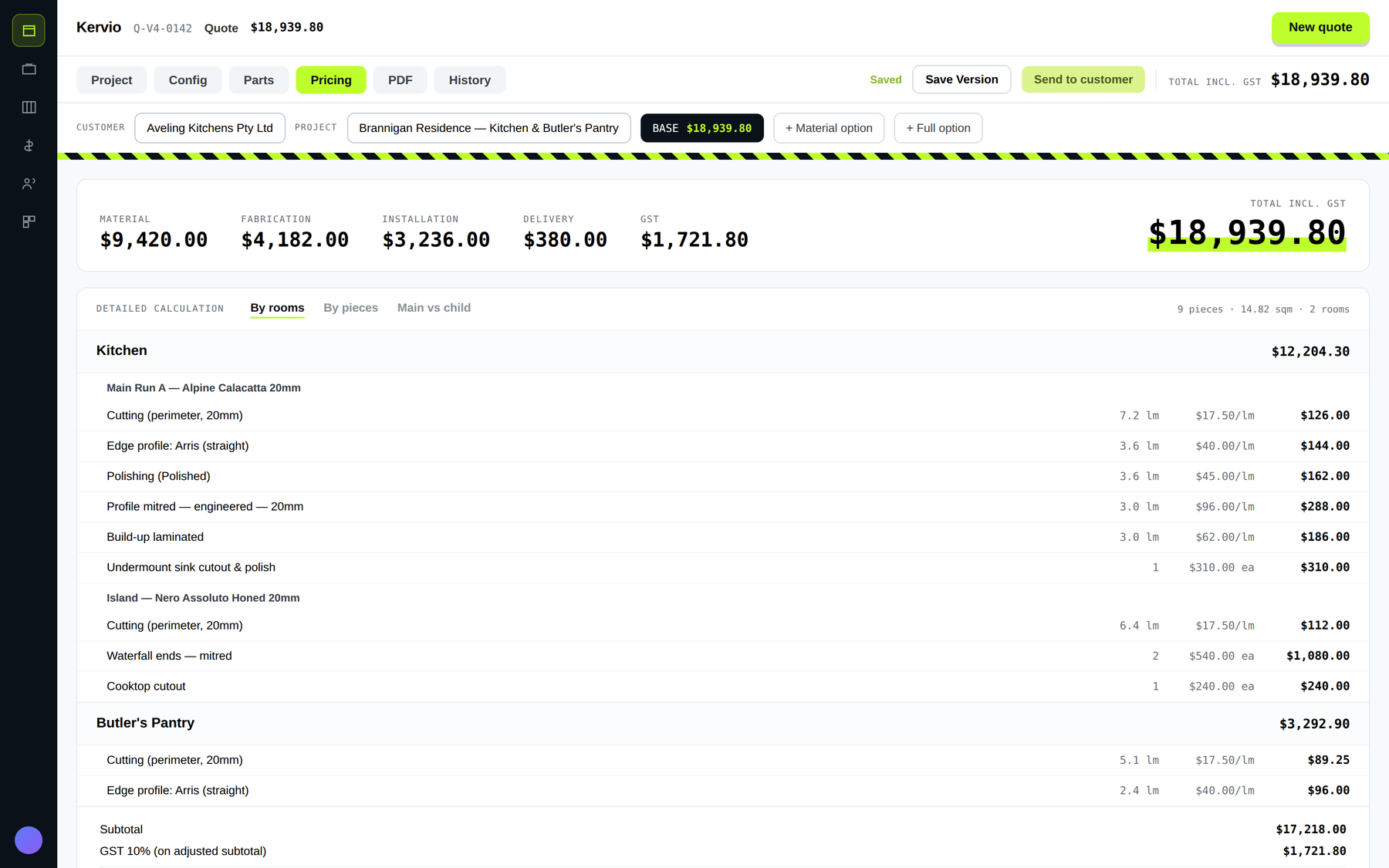
Built with
I don't advise on the
revenue system.
I build it.
Twenty-five years of revenue operations and go-to-market, and a method for directing AI to turn that judgement into working software — quickly, and at a fraction of the cost of the team it replaces. Everything below is clickable for a reason: a page that only describes what I do would be a worse version of a résumé.
Tell it what you are.
Who's reading this?
The page reorders itself around your answer, and the panel on the right shows you exactly what it did — the classification, the routing, the record it would have written. This is the same pattern I build into clients' front doors: one entry point, several completely different conversations.
Nothing here leaves your browser. Wired to a CRM, this same event stream is what creates and enriches the record.
Four capabilities, and what proves each one.
Every claim on this page is attached to something that exists. Tell it what you actually need — pick one or more, and the page reorders itself around your answer. That reordering is the same mechanism I build into client sites; here it is running on me.
Things that are running right now.
One form. Four conversations.
This is the Alpha Surfaces enquiry engine, rebuilt here so you can use it. Say what you are and the form reconfigures around you; name the company you work with and it resolves against the CRM, bringing the account and its trading history with it; ask about stock and it answers from the inventory data instead of promising a callback. The panel on the right is what the business sees the moment you submit.
Enquiry engine
Nothing yet. Choose what you are, and watch this side fill in as you go — this is the record, the routing and the priority that would be created in the CRM in real time, before anyone has read a word of your enquiry.
Where your revenue leaks.
Seven questions. It scores six zones of your revenue system, tells you which one to fix first, and shows you what the first twenty hours would go on. It's the opening conversation I'd have with you anyway — you may as well have it now, and keep the answer whether or not you ever call me.
Revenue system diagnostic
What a month of me actually buys.
The pitch is simple: you probably can't justify a full-time senior revenue engineer, and you don't need to. Choose the outcomes you want, set the hours, and see what fits — and what the same work costs as a hire.
Scope builder
Pick some outcomes to see how they fit.
Copied — paste it into an email and send it to me.
How software gets built this fast without being rubbish.
Specification before generation
The commercial logic is written down first — the object model, the states, the acceptance criteria. AI is fast at producing code and hopeless at deciding what should be true.
Directed build, in the loop
AI engineering agents do the typing under direction, in small verifiable increments. Twenty-five years of knowing what a working revenue system looks like is what makes the direction worth anything.
Ground-truth gates
Nothing advances on a claim. Each increment is checked against real data and a real user's workflow before the next one starts. This is the whole difference between a demo and a production tenant.
Commercial close
Priced, packaged, onboarded and measured. A build that never gets a revenue-per-customer number attached to it isn't finished, it's abandoned.
You never filled in a form.
Most of the people who land on your site leave without telling you anything, and you learn nothing from the visit. The panel beside this page has been building a record of you the whole time — segment, stage, intent, and a next action specific enough that someone would actually do it. Below is the message your team would have received.
Nothing has crossed the threshold yet. Run the diagnostic or build a scope and this fills in — the same way it would on your site when a real buyer does something that matters.
Anyone can log page views. The value is the decision.
Tracking is table stakes and nobody buys it. What's actually difficult is the layer above: a score that reflects how you qualify, a stage your sales team recognises, and a next action worded so specifically that a rep does it instead of ignoring it.
Notice the score is interrogable — you can see exactly which of your actions moved it. Sales teams act on a score they can argue with, and quietly ignore one they can't.
A note, assembled for you.
None of this was written in advance. The page put it together from what you actually did on it — which is the whole argument: this is what a system that pays attention can say to someone before they have spoken to you.
Twenty-five years, in the usual order.
San Francisco. Previously Singapore, Boston and Brisbane. Australian citizen, Bachelor of Business (QUT).
Full career history
Start with the diagnostic, then talk to me.
Tell me what's broken and I'll tell you honestly whether it's worth my hours or whether you need something else. That conversation is free and usually short.
sean@cangaroo.ai →